Showing posts with label All Wards. Show all posts

Tuesday, May 1, 2012

The 1B permit parking permit

Had a good experience  successful getting 30 day permit parking sticker just now.

With construction taking place in the lane used to access the yard parking normally used a trip to the parking permit office was required.

What was so interesting was the instructions of how to use and where I could park lesson was.

In addition they have a great ...old? Air tube transfer system manufactured by Lamson that transfers cash payments down to the cashier office and your change back up.

Alert: bring a credit card and or debt card, if you pay by cash you will have wait for return of the air wooshed change, which can take some time 20 mins so far.

Although the Parking permit office is entertaining, as there is no why to avoid all the "why this ..whats that parking permit conversations.


Two of the small tubes used for the transfer of cash between floors.

Air system manufacture link

Location:The West Mall,Toronto,Canada

Monday, February 27, 2012

Bike superhighways just what Toronto needs and probably will never see.

[caption id="attachment_10508" align="aligncenter" width="499" caption="Blue painted area is bike superhighway for cyclists"][/caption]


The City of London just announced that because of the opening of two bike superhighways in July of 2010 bike traffic is up 70% on two major thoroughfares in London in the year following. Build to get people on bikes instead of in their cars laying down safe, straightforward  cycling paths from outer neighborhoods into the city. They plan to  install an easy to navigate cycling super numerical series of such super pathways.

Read more: London's Bike Superhighways Help Bike Traffic Increase by 70% | Inhabitat - Green Design Will Save the World

Read More: concerning the input of cyclists in the design of the Bike superhighways

Other cities have built such roadways for decades such that they are a normal part of the transportation choices for people in the  Netherlands - which didn't get its extensive network of separated bicycle facilities overnight—it took decades [1.source]

Another city - Portland—which may spend $600 million on bicycle infrastructure over the next 20 years, with a goal of upping the cycling rate to 25 percent of all trips by 2030—that has most energetically taken on the bicycle boulevard concept...[1.source]

And further...

Sweden Plans A New Superhighway For Cyclists


Those Scandinavians are so cutting edge and bike friendly. Now they’re going a step further, connecting two cities with a major artery that’s for bikes only. [2.source]


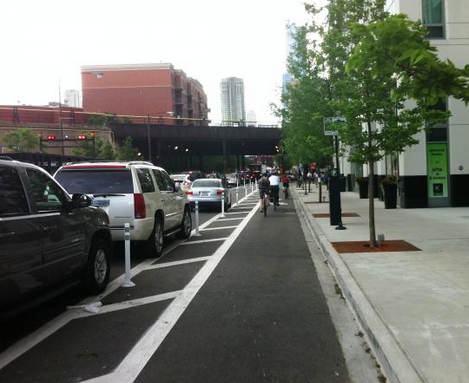
Chicago has a series of  protected bike lanes which probably would be a good idea for your Toronto with its car non-centrism around the rights of people moving and people driving.


[caption id="attachment_10504" align="aligncenter" width="469" caption="Protected bike lanes are designed with all kinds of people in mind, Chicago,  Click image to visit source of image site, livininthebikelane.blogspot.com"]Protected bike lanes are designed with all kinds of people in mind.[/caption]


Transport for London's Cycle Superhighways site click here to view.

Tuesday, May 31, 2011

Great Toronto Star Article City councillors form their own committees, task forces — without Rob Ford

[caption id="attachment_7812" align="aligncenter" width="475" caption="snap from the paper - great reporting by the star on this issue"][/caption]

This author hopes our local rep joins them.


Full story from Star site - story by David RiderUrban Affairs Bureau Chief

Mayor Rob Ford’s tight but apparently slipping grip on the city agenda faces a new challenge — councillors launching their own committees and task forces.

Mike Layton, an ardent cyclist, is forming an ad hoc body to replace the cycling advisory committee, which is among the city’s 20 citizen groups Ford is trying to scrap.

The committees, offering input on everything from cleaning up the Don River to child care, are in limbo but council recently voted to have Ford take another look at several, and report back by July. It was one of a handful of recent votes the mayor has lost.

Layton (Ward 19, Trinity-Spadina) got the idea from his father, federal NDP Leader Jack Layton, who countered frustration at the loss of the cycling committee by asking: “Why don’t you just start your own?”

Layton plans to be the committee’s voice at council, asking questions of city staff and passing on input on the plan for separated downtown bike lanes to be unveiled by public works chair Councillor Denzil Minnan-Wong in June.

The new committee will use the terms of reference of the old one as a starting point, Layton said, adding he still must sort out membership but hopes to have representation from the Toronto Cyclists Union.

Josh Colle (Ward 15, Eglinton Lawrence) also wants to get cyclists on a task force — with drivers, pedestrians, transit users, cabbies and business representatives — to work on solutions to Toronto’s costly and frustrating traffic gridlock.

Colle, one of council’s rookie centrists, hopes to get colleagues’ support to make the committee official, bringing players together to curb the “cyclists versus motorists” dynamic. Ford is fond of talking about “the war on the car.”

“We have all the (players) in silos but really their interests are aligned — getting around more efficiently, more quickly and more safely,” he said.

John Filion recently resigned from the government management committee, angry that Ford’s office ignored his requests to return to the planning and transportation committee that he chaired when David Miller was mayor.

Filion (Ward 23 Willowdale) said he’ll continue participating in planning committee meetings as a visiting councillor, without a vote, but he’s also thinking about taking a page from Layton and starting his own planning committee.

“It could involve a lot of citizens,” he said. “I just might do that.”


link to story on Toronto Star site

Friday, October 15, 2010

Important Rabble article


Reported here is a important and good article for any person stymied by the  current election issues in Toronto

Reposted from rabble.ca

Moving forward on municipal voting reform in Toronto
LARRY GORDON
OCTOBER 14, 2010

As we enter the final stretch of the Toronto municipal election, two things have become abundantly clear.

First, we need a new and better way of electing our mayor and city councillors. A voting system that forces many people to vote strategically rather than sincerely, and that creates a council not reflecting our city's diversity, has no place in a 21st-century democracy. Second, we need a process to identify the best system or systems for Toronto -- a course being promoted by the Toronto chapter of Fair Vote Canada.

Progressive activists have been fighting for fair and proportional systems, and voter equality, at the federal and provincial levels. Now we need to press for the same at the municipal level. Voter equality is what creates truly representative bodies that reflect the full diversity of the community.

In 1865, Swiss philosopher Ernest Naville summarized the core democratic principles this way: "In democracy the majority has the right of decision, but all have the right to representation." If those principles resonate with Torontonians -- and indeed all Canadians -- then we have to study the systems that deliver the goods.

How do we address those principles? Broadly speaking, there are two types of voting systems: winner-take-all and proportional (or fair) voting systems. Each has its place in a democracy.

When an election is held for a one-person position -- such as a mayor, party leader, president -- a winner-take-all system is needed. Only one candidate can win -- only one person can play the role.

Under the current system in Toronto, the candidate with the most votes wins the mayor's seat. But we could switch to a run-off system, where the winning candidate needs at least 50 per cent plus one to win -- most easily done by using a ranked ballot, where second choices play a role if no candidate has a majority of first-choice votes. Most Torontonians would probably greet the use of instant run-off balloting for the mayor as a step forward.

But with any type of winner-takes-all voting, instant run-off or first-past-the-post, a lot of voters still cast ballots that elect no one.

Fortunately, when voters are electing a city council (or provincial legislature or federal parliament) -- a body with many elected people whose purpose is to represent and act on behalf of all voters -- then we have another option. We can and should use a fair and proportional system, designed to allow almost all voters to elect someone to council. This means that not only do the largest group of voters, or the majority, get to elect councilors, but so will those with minority points of view. For example, progressive voters living in a part of the city dominated by conservatives will be able to elect someone, and vice versa. With a fair and proportional system, you don't lose your right to political representation because of your political views and where you happen to live. And the overall outcome is a council representing the full diversity of the electorate.

The fair voting concept sounds great, but how do you do it at the municipal level?

This is where a citizen-engagement process is needed. We have numerous options and may even want to develop a hybrid system specifically for Toronto.

One option is having larger wards that elect more than one councillor -- that's what allows more than one group of voters to gain representation. Electing two or three councillors in larger wards opens the door to representation for both the majority and minority within a ward. Electing four, five or more in a larger ward gives even better assurance of fair representation for all.

Another approach is a mixed system, which would have the added advantage of creating council positions that are accountable to a citywide base of voters.

For example, rather than 44 small neighbourhood wards, we could have 34 wards and 10 citywide council positions. The 10 citywide positions would be elected by everyone, using a ranked ballot form of proportional representation (called the single transferrable vote), which would allow minorities as small as 10 per cent of all voters in the city to elect a candidate to one of those positions.

Another interesting option: rather than citywide seats, we could divide the city into four districts, each with three or four district council members to represent voters in those areas.

Some say that the only reform we need in council elections is to use ranked ballots (instant run-off voting) to elect the individual councillors from the 44 wards as they exist today. But that winner-take-all voting would still leave too many voters unrepresented -- plus it leaves us with a council composed solely of politicians each elected by a portion of voters in just 1/44th of the city. No one other than the mayor would be democratically accountable to broader groups of voters.

When we have a reform opportunity, let's not just replace the current system, which leaves far too many people unrepresented, with another alternative that also leaves too many people unrepresented. One of the mixed systems described above might be an interesting compromise for those who want to see instant run-off voting in wards and others who want to see the introduction of at least an element of proportional representation. And multi-member wards also deserve serious consideration, which leads to the final point.

Reform opportunities are all too rare. The best choices and trade-offs are not always obvious. A traditional sound-bite political debate by city council is not good enough. Torontonians need to be engaged in a serious and thoughtful assessment of the alternatives, with both city and media support.

The Toronto Chapter of Fair Vote Canada is calling for an official city-managed, citizen-driven, expert-supported engagement process to look at municipal voting system options to identify the best voting system or systems for Toronto. In the coming years, we may have one of those rare opportunities to improve our municipal electoral system, so let's do it right -- by engaging citizens and exploring all options.

Larry Gordon is executive director of Fair Vote Canada and a Toronto resident. See FVC Toronto Chapter Facebook group: Fair Voting in Toronto.

- Posted using BlogPress from my iPhone

Saturday, May 1, 2010

Life expressed in a public streetscape

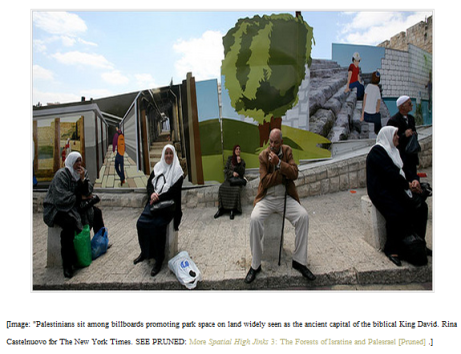
[caption id="attachment_6621" align="aligncenter" width="462" caption="Palestinians sit among billboards"][/caption]

I really like the idea of public billboards, these in Palestine are truly wonderful - note billboards there does not meaning advertising, but a form outdoor art.

Would like to see this in the Junction - note the canopy of the tree expressed above the main painted structure - providing a great  link to the sky.

Monday, October 26, 2009

Solid Waste Division fears your excess recycling

[caption id="attachment_5457" align="aligncenter" width="473" caption="The time study monster "]The timestudy monster [/caption]

It seems a report in the Toronto Star has caused the outing of a  little known rule for collection personal who drive our streets to collect  household recycling.  In an effort to achieve maximum collection efficiency- that is, the amount a team can pick up in a shift, there is a rule that does not allow the flexibility of the driver to pick up any excess recycling.

This action could result in a risk of homeowners choosing not to participate but instead throw their excess recycling or compost into the garbage, a city report states

This information was presented to council in a motion for information request by by Councillor Ootes, seconded by Councillor Stintz

Their motion ends with this paragraph


There should not be a limit placed on the amount of recycling that a homeowner can dispose of at their curbside. There should be a convenient, simple and encouraging program that allows for excess recycling to homeowners when the need does occur.

Full motion jump below.

Tuesday, October 13, 2009

Attempting to ask Canada Post about the local post office

postal transpr

Post office closing over post office outlet over marketing


(see update below)

The blog though it would be fair and reasonable to post the reasons Canada Post wanted to close down the Junction Gardens Post office.  Starting with a real person search of their website and then a Google "site" search, nothing turned up, no press releases, no publicly available statements or plans. A telephone call was made and after 20 minutes on hold we were told a question such as this must be made though their online contact us form and they would reply within one to two business days.

Which has been done yet, why should a simple question about were to find information about an impending closure of a community post office not be addressed on their site or though a wider public communication such as newspaper ads?

...we did find a lot of the subject at the Canadian Union of Postal Workers site

Tuesday 3:38pm UPDATE: submitted by Martin L  (upped from the comments section) The JRA's urban person.

...just got an update from Canada Post regarding the closure.

The store is closing the end of October, no new outlet is opening and the service is moving to the already existing outlet at the Shopper Drug Mart at Keele and St. Clair.

I was told the issue is the store "is too narrow to fit the new image".  The customer service rep went on to explained that Canada Post is implementing a Canada wide marketing effort called "New Maple" and the store simply doesn't fit the display panels.

I can't believe we're loosing our post office outlet over marketing!

Saturday, October 10, 2009

Sat Toronto Star article on the use of laneways

Regular readers of this blog may remember the author of this post drones on about the loss of a laneway everytime the city sells one of to some private concern. They many sell a laneway to a condo developer or to a abutting homeowner.

Laneways should never be sold as they themselves are abutted by the rear of many buildings that could be used to create a second front to the high street buildings, and cause te laneways to be become much more integrated into the city.

Today the Toronto Star has a article on just this idea click here to vist the article at the Toronto Star site

Highlights.

According to Toronto architect Brigitte Shim, laneways represent one of the great untapped resources of the city. In the mid-1990s, she and a group of graduate students at the University of Toronto undertook an in-depth study of Toronto's laneways. As the report pointed out, there are more than 2,400 in the city, which gives an idea of the impact they could have if development were allowed. One estimate concludes local laneways have enough space for upwards of 6,000 housing units.

And as Shim says, the advantage of laneway housing is that it can be plugged into the existing infrastructure. At a time when less is more, the idea has never made more sense.

In Cabbagetown, an intact 19th-century neighbourhood that boasts some of Toronto's most appealing alleyways, the process of integration is well under way. They are an essential element in the 19th-century area, built into the very fabric of the district.

Toronto has a huge number of lanes where people live and work. And except for the fact that city planning policies are designed to keep residents away, the back roads of Toronto could be home to thousands.

Sunday, August 9, 2009

Toronto's out-of-bounds attractions [Toronto Star article]


The star has a article about closed public spaces in the city, it presents a view fully endorsed by this blog.

Despite the triumph of Doors Open, there are important spaces that are off limits in Toronto – architecture created for the public that is, unfathomably, locked up tight.


from the article...

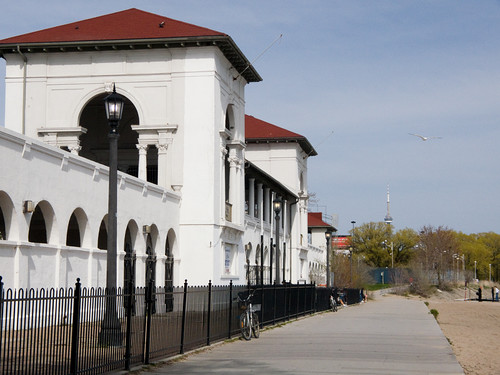
The Sunnyside Bathing Pavilion says as much about the Toronto of today as of yesterday.

Built in the early 1920s, this once-marvellous lakeshore structure speaks of a time when swimming in public still entailed some modesty, not to mention formality. With its fortress-like walls and neo-classical architecture, it evokes a sense of grandeur; swimming here was not simply fun, it was ennobling.

Keep in mind that this was the place where men and women went to change into their bathing costumes, not where they went to swim. It was also a place to enjoy the scenery, read a newspaper and meet friends.

Today, it is a shadow of its former self. Semi-renovated, half-closed, it remains clearly popular. But there's a tackiness to the pavilion now that belies its builders' intentions. On a sunny evening, the café is full of Torontonians enjoying hotdogs and beer. Beach volleyballers fill the space between the building and Lake Ontario.

Look a little more closely, however, and the pavilion reveals itself as a warren of locked doors, chained gates, closed stairwells and unused spaces. Worst of all, what might be the most attractive feature of the complex, the raised balcony level that wraps around the complex, is closed. link to full article

Wednesday, August 5, 2009

Cyclists licensing and mandatory helmets on the horizon?

Councillor Walker,

seconded by Councillor Hall


Councillors Walker, and Hall have put forth motions to will require licensing and mandatory helmets in the City of  Toronto is they are approved.


Excepts from the motions....


Councillor Walker, seconded by Councillor Hall, recommends that:


1. City Council enact a by-law to mandate that all cyclists must wear helmets on roads

and sidewalks in the City of Toronto.


Summary


Recently, City Council has prioritized the user groups in public space and public roads within

the City of Toronto. The four groups are prioritized as follows: 1) pedestrians; 2) cyclists; 3)

transit riders; and lastly, 4) vehicle drivers.


Since cyclists are now considered as priority #2 on the public highway, it is being modified to

accommodate these cyclists. Accordingly, with more space on our roads being given over to

cyclists, more rights are being given over to cyclists, and with increased rights come increased

responsibility. Cyclists need to be made aware of this increased responsibility for safe use of

our roads.


Safe use of our roads must include the safety of the cyclists themselves; cyclists must be

protected against the foreseeable dangers on our roads. Conflict between cyclists, cars and most

particularly trucks, and as well conflict between cyclists themselves, create potentially

dangerous conditions. A collision between a cyclist and a car or truck can result in life-altering

injuries or death, particularly for the cyclist involved. A collision between a cyclist and another

cyclist can also result in a serious outcome, if not from the impact itself, then because of the

cyclists falling into oncoming vehicular traffic which results in another collision. It is not at all

rare for a cyclist to experience a disabling head injury from a collision and for that cyclist to

become incapacitated and not be able to provide for his or her family.

2


Cyclists have equipment at their disposal to increase their safety, such as sounding bells,

reflectors, lights and helmets. By far, the most important safety equipment to the cyclist is the helmet.


Councillor Walker, seconded by Councillor Hall, recommends that:


1. The Executive Director, Municipal Licensing and Standards develop a cyclist licensing

program, in consultation with the Ontario Ministry of Transportation, to be brought

forward to City Council.


Recently, City Council prioritized the user groups in public space and public roads within the

City of Toronto. The four groups are prioritized as follows: 1) pedestrians; 2) cyclists;

3) transit riders; and lastly, 4) vehicle drivers.


Accordingly, with more space on roads being shared with cyclists, there is an increased

responsibility to ensure public safety for cyclists. Cyclists need to be made aware of this

increased responsibility for safe use of our roads. Also, City Council needs to put in place a

system to adequately regulate cyclists in a manner commensurate with their increased rights

and responsibilities.


Bicycle Operator/Cyclist licensing is a method of increasing awareness of the existing rules and

regulations applicable to cyclists, such as the Highway Traffic Act. Also, licensing provides for

a formalized relationship between the City and cyclists which the City can use to promote safe

use of bicycles, highlighting requirements for mandatory bicycle equipment such as soundingbells,

reflectors and lights. Furthermore, licensing would provide for more effective

enforcement of the applicable laws and clarify collision situations. Currently, there is not a

requirement for a cyclist to carry personal identification so it is difficult for Police or citizens to

manage collisions between pedestrians, cyclists and drivers due to the fact that a cyclist can just

walk away from the incident; this is particularly troubling if the cyclist is at fault. Also, it is

difficult for a Police officer to give a ticket for a moving violation of the Highway Traffic Act

to a cyclist who is not required to have personal identification on their person and therefore few

tickets are issued.


Thursday, July 23, 2009

Toronto Life Square has gone into receivership

The Toronto Star is reporting that the Toronto Life Square -  has gone into receivership.

from The Star..

In case you're wondering, Toronto Life Square shouldn't be confused with Yonge-Dundas Square across the road. The latter really is a square, the former a building.

Constructed on land expropriated by the pre-amalgamation City of Toronto in the late 1990s, the massive entertainment complex was developed by a subsidiary of PenEquity Realty Corp. From the start, however, the project was nothing but trouble for the firm. Work on the building began five years behind schedule, and only after a series of setbacks. At one point, Disney, a prospective tenant, simply walked away from the table, leaving PenEquity in a state of open-mouthed shock.

Of course, Toronto Life Square – the building – isn't much to look at. Big, grey and hopelessly plain, it had almost nothing going for it other than its location, but what a location.

Link to full story

Tuesday, July 14, 2009

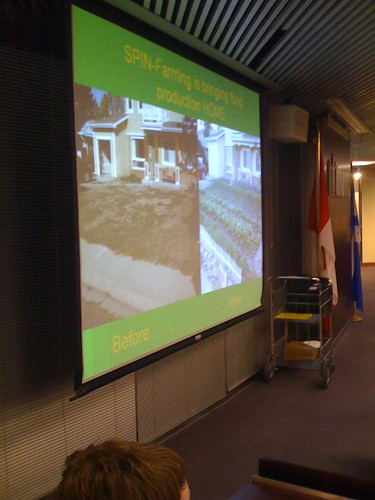
Toronto Star Article on SPIN Farming in the west end & related links


SPIN – small plot intensive farming

...from the article published July 14th 2009

Nixon is part of the new wave of farming, called SPIN – small plot intensive farming – which is growing in cities across North America. Riding on the crest of the local food wave, SPIN is cashing in on a new eager market.

There are some surprising benefits to growing crops in the city, says the movement's leader, Wally Satzewich.

You can't turn a tractor in a tiny backyard, so there are fewer expensive start-up investments, for one. Then, there's the city's asphalt, which absorbs the sun's heat and makes us all sweat more on hot summer nights. But, for farmers, it means a longer growing season in the spring and fall. And there is the garden hose.

Eco-farmer blossoms as urban planter full article link

Thursday, June 25, 2009

City Council - Light Rail Vehicles meeting today and a great background post about the issue at stevemunro.ca

Over at stevemunro.ca a blog about transit and politics there is a great post about

How Many Streetcars Do We Need?


an excerpt...

Recent comments by Adam Giambrone, Chair of the TTC, suggest that 30 to 40 percent of the streetcar fleet is out of service in the shops, and that bus substitution will be required on some routes come the fall.

Those of us who follow the TTC have been waiting for a definitive fleet plan for some time, and hope to see one, finally, in the July Commission Meeting Agenda.  [link to full post]

Info on the city meeting about the issue today.

City Council Agenda - Meeting 37 (Notice of Meeting)

  • CC37.1 - report (June 25, 2009) from the City Manager and the Deputy City Manager and Chief Financial Officer, headed “Purchase of 204 Light Rail Vehicles (LRVs) - TTC Capital Funding”
    Background Information
    Report

City works staging equipment on Black Creek Drive

june-25-09-026

Equipment that appears to be from the transportation and works department has started to be placed at the location of the currently planned community centre at Black Creek Drive and Eglington Ave West.  When asked,  it was stated it was staged there because of the strike.

Sunday, June 21, 2009

Parks, Forestry and Recreation, to market naming rights and other private funding arrangements

[caption id="" align="alignnone" width="500" caption="Grenadier Pond"][/caption]

The  city auditor general is recommending

7. The City Manager, in consultation with the General Manager, Parks, Forestry and Recreation and the Director, Toronto Office of Partnerships, develop, for approval by Council, a comprehensive City-wide policy on naming rights and other private funding arrangements, such policy to


a. consider all existing policies related to


i. Parks and Recreation Naming and Renaming Policy
ii. Donations policy
iii. Advertising
iv. Unsolicited bids
v. Sponsorships and partnerships


b. include guidelines on


i. eligibility criteria for facilities to be considered for naming rights
ii. responsibility and control processes for securing and accepting naming
rights or other private funding arrangements
iii. the creation of endowment, or similar funds, to offset future
maintenance and repair costs for new facilities put in place under this
policy.


8. The Director, Toronto Office of Partnerships, in consultation with appropriate divisional staff, identify all potential projects and facilities that may benefit from  naming rights or other private funding arrangements and, with the approva
l of Council, pursue such funding according to corporate guidelines.

staff report [link]

Thursday, June 18, 2009

Rogers Structures program segment - Humberside Collegiate Institute


[email_link]


The  Rogers Structures program will be airing,  episodes which feature , Humberside Collegiate Institute and  other west end realated content  , and will be airing on Cable 10 & 63 in Toronto:

Today   3:00 PM

Explore Toronto's history and architecture with host Colleen Walsh. Featuring Islington Village.

The Humberside Collegiate Institute segment will air

Thursday, June 18 @ 8:30pm
Friday, June 19 @ 10:30am
Sunday, June 21 @ 11:30pm
Monday, June 22 @ 8am
Thursday, June 24 @ 3pm


Other Upcoming Episodes dates

Week of June 22nd - Corktown, Humberside C.I., Thistletown Week of July 13th - Thistletown, Humberside C.I. & Corktown

Week of July 20th - The Annex
Week of Aug 3rd - Thistletown, Humberside C.I. & Corktown
Week of Aug 24th - Thistletown, Humberside C.I. & Corktown
Week of Sept 7th - Theodore Heintzman & Central Technical School
Week of Sept 14th - Thistletown, Humberside C.I. & Corktown
All scheduled programs are subject to change.
About the program from Rogers site
Structures is the award-winning television series that has captured the attention of people young and old right across Ontario! Focusing on Toronto's dynamic historical buildings, legends and personalities, Structuresbrings you compelling stories about our local culture and heritage. If you're new to Structures, sit back, relax and enjoy a ride back in time.
Post submitted by David W.     ....who has also informed that the show "Structures" has been cancelled, which will result in no more episodes being created.
[email_link]

Thursday, June 11, 2009

Annex - four corners - 3 fences - 1 garden

annex-four-corners

This corner in the Annex is interesting as it clearly illustrates the character change a street or avenue can have in relationship to property owners choice of fence type or simply having a fence.  Traditionally in Toronto tall fences on front residential lots were rare and when they were used they were metal fences that one could see thorough.

Looking at the image above you may see how differently   the unfenced home lot relates to the street as compared to the fenced home lots.

The fences above seem to be constructed to create a private side yard, which of course is the property owners right, and there want of more private space in busy city area has be considered.  But how it changes the street scape, completely removing the sense of openness and removing from the general community the street to home drop-back that is so important to casual street meet talks and gatherings. the fences that come right to the street seem to force walkers and persons standing on the sidewalk out onto the street.

The City of Toronto  fence bylaw [link]

Tuesday, June 2, 2009

Square Foot Gardening ideal for Junction Yards


homepicmelWhat Is Square Foot Gardening?


Would you like a garden filled with beautiful flowers, luscious vegetables, fresh herbs, but NO WEEDS or HARD WORK? Well, that is what Square Foot Gardening is all about.  I’ve taken all the hard work out of gardening. No heavy digging, watering, weeding, thinning, or over-flowering harvest. What is left is a productive, well-kept, colorful garden that looks more like a landscaped area than a typical single-row garden-Mel Bartholomew

"Square Foot Gardens" would be an ideal addition to Junction backyards.   Living so close to the railroad tracks, we sometimes question the integrity of the soil to grow vegetables.  The concept of Square Foot Gardens would be a alternate methodology in growing urban crops, but not directly in the soil.  Square Foot Gardens involves the construction of a 4 x 4 ft raised box onto any surface (could be soil or even concrete), this box is then filled with a mixture of good quality soil.  The box is then divided a grid of 4 x 4, giving you the opportunity of planting 16 different crops.  Apparently this method yields a much larger harvest than traditional row planting.

Please see the below links for more information on Square Foot Gardening

http://www.squarefootgardening.com/

http://www.canadiangardening.com/gardens/small-gardens/build-a-square-foot-garden/a/19960

[email_link]

Each and every day multiple hours I miss Matt and Nate

 He’s really does not answer my questions about Matt and Nate, No way, they know the truth