Friday, October 7, 2011

Textiles in the form of screen printing at Wise Daughters Craft Market

BIG secret activity comes to Junction, , which is why the Junction is so luckily to have Wise Daughters running this project,

Textiles are the Big secret in Canadian Craft, outshining the other three craft areas taught in Ontario in this authors opinion. Surface work has traditionally been a large part of the work explored, taught and made at the two craft schools in Ontario. Students in the Fabrics [1. changed from textiles to fabrics in last few years] at Sheridan’s Crafts and Design program start early working with lino cut blocks. As well over the course of their training students receive a great amount of immersion into aspects of surface printing, much of it in the use of screen printing.

3 dimensional fabric work is also just well purported in these schools.

The greater GTA has two resident programs in well outfitted studios, one at Harbourfront in the cities core and the other in The Living Arts Centre in Mississsauga [2. Full discourse: me saying  the Living Arts Centre in Mississauga is great, can be read as self servicing as I and my studio team at the time designed, and build out the studio in 1996 though 1997] both which are great stepping stones into full time craft designer/maker. (which is not a profession in this decades long craft artists thoughts)

Groupings of makers in a learning, sharing and creation opportunity such as this one offered by Wise Daughters are terrific for the continual redevelopment of craft in the Junction [3. The junction was once a major Craft area in Toronto] and Ontario itself. After witnessing many such courses take place at various galleries and centers, you should know the atmosphere often takes  on the beauty of the teaching experiences at the educational settings at the full time schools - craft can do that, bring out everything in a person.

Interested in the deep unbounded nature and history of textile craft in Ontario and the world - read and view the works of Skye Morrison - the former studio head of the textiles studio at Sheridan’s Crafts and Design program and a Doctor of  folklore (Cornell University). Text 1 link  Text 2 link to Dr. Morrison's Red Threads project.

[caption id="attachment_9007" align="alignright" width="200" caption="Click image for texty textile story"][/caption]


One issue this author has, sure have fun with the creation of your own stencil graphic, as offered but explore the inter-connectivity of the craft process by studying and remaking images of historical and complementary textiles printers, it can make you float.

Oh and Men textile printing is simply not just for female craft-persons.


[caption id="attachment_8943" align="aligncenter" width="275" caption="3079B Dundas St. W. TO, crafts@wisedaughters.com - 761 1455m or click image to attend the WD site"][/caption]


[caption id="attachment_8945" align="aligncenter" width="297" caption="3079B Dundas St. W. TO, crafts@wisedaughters.com - 761 1455m or click ikme to attend the WD site"][/caption]

Wise Full Nov calendar pdf 

Around the GJA in buildings


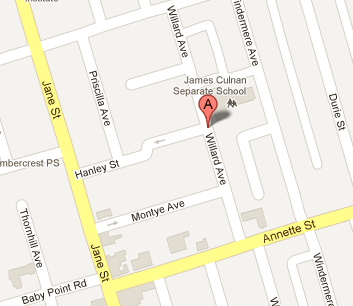
[caption id="attachment_8991" align="aligncenter" width="490" caption="Click image to go to a Google map of the area"][/caption]


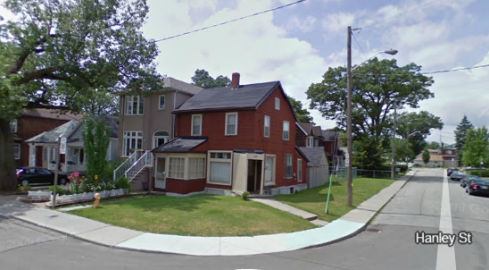
Great architecture is a continuous wondrous experience.  As a family home this building is great. Buildings that are  built and continue to serve as icons of a communities built heritage are rare. Often over decades renovations and changes are made to suit the needs or simply the whims of current owners.

A building can  lose the majority of its built form over time. When this happens to a greater number of homes than those left in their original built state the fabric of the built environment changes.

How important is built environment visually to a community, - a lot, city planners often mandate and developers will subscribe to the modeling of new buildings to match the built fabric of a community. A recent example is the  Heintzman Place condominium development. This  condominium project  replaced a disused hardware and automotive retail building and the new building is cladded in a brick veneer simply to allow the mass and visual aspect of the buildings to enter into the community visually and with a historical  relationship by use of specific materials  that have been used to build in the area before.

Once in a while a house escapes this fate and its period aesthetically perfect  form is kept over the run of owners, and the decades of facade changes that occurs to most buildings. It is hard to  imagine that that a house in the Junction  looking like anything else but a added too and reworked image of its self.

Not with this house on HANLEY ST & Willard Ave. The house has retained its original cladding materials and elevations judging through material currently on the building. The rear shed may have been added as determined by the connection points and methods used at the intersection of the shed to main body of the house. Probably this was none in the same building materials era as the faux bricking is completely similar between the two masses of the shed and the main house building. 

Instead of reinterpreting the past, buildings that are left in this state create a new future, perhaps unaffected with new  shape, or materials, they are as unique as the thought processes of the original design  that can inspire new designers of buildings.

We’ll never know for sure, why this state happened has but its a great building to view for now while on a walk.

[caption id="attachment_8992" align="alignright" width="353" caption="Click on Image to go to Google maps of the area"][/caption]


Thursday, October 6, 2011

The Stockyards Development, ground moving equipment all over site

[caption id="attachment_8959" align="aligncenter" width="490" caption="Artist view of part of the completed project"][/caption]


[caption id="attachment_8958" align="aligncenter" width="475" caption="View from Gunns Ave with earth moving vehicle moving past"][/caption]

This large retail development being build upon the last great track of Meat packing land, has started to move earth as a beginning to the construction of the retail community they are building. Now that the machines have arrived the blog will begin activity reporting the the project. Probably in much more detail than you need :-)


Wednesday, October 5, 2011

Keele St & Humberside Ave - great side facade


just look at -


the inset eves setback to the window just under the roof line

just look at -

the 1st floor arched windows

COFFEE and All That JAZZ has that excellent stroller mob location that the Junction truly needs


Out with the kids with the huge stroller or by the self or with friends on bikes? While many coffee and cafes in the west local neighborhoods present one with the almost impossible problem  to solve  of where to put the metal and fabric thing, not here.

This around the corner from Roncy cafe has a great location that solves this problem both in and outside.


72 Howard Park Avenue

Toronto, ON, Canada


(416) 531-7622


Tuesday, October 4, 2011

Going to miss this building

...when the condos arise, this 60's or 70's electrical TTC station.


Volta Lofts is a new condo project by Terra Firma Homes currently in preconstruction at 588 Annette St in Toronto. Available condos start in the high $300,000's. The project has a total of 19 units

Beresford Ave & Annette St.,  19 units, 812 to 1064 Square Feet

from the developer text and rendering,

From the builder: 

The Bauhaus movement redefined architectural beauty. Built on the notion that less is more, it did away with excess ornamentation, introducing the world to the splendour of clean lines. This focus on simplicity and functionality is woven into Volta Lofts’ DNA. Iconic limestone, heritage brick and glazed floor-to-ceiling windows blend tradition with modernist architecture. Artifacts from the original Beresford Substation decorate the lobby, giving a nod to local heritage. And rooftop solar panels work in tandem with insulated concrete forms to create an energy-efficient home that’s good for the planet as well as the pocketbook.  From the high $300,000's


Broken windows theory and its relevance to a safe a lessened crime Junction


[caption id="attachment_8911" align="aligncenter" width="490" caption="Industrial mess near Mulock Ave"][/caption]


Dumping garbage and trash

Drug  and Alcohol use in parks

prohibition in the Junction again- oops

litter all around

Loud uncontrolled trucking at all hours and days, even on Sunday.

All of the above are affecting the greatness of the the Junction right to an extent much greater than the last few years,  as projects take  this author throughout the Junction every week, more and more of this stuff is happening,

 Are we moving back into the Junction's broken window phase? At one time the Junction was a case study for the theory


From Wikipedia

The broken windows theory is a criminological theory of the norm setting and signaling effects of urban disorder and vandalism on additional crime and anti-social behavior. The theory states that monitoring and maintaining urban environments in a well-ordered condition may prevent further vandalism as well as an escalation into more serious crime.

The theory was introduced in a 1982 article by social scientists James Q. Wilson andGeorge L. Kelling. Since then it has been subject to great debate both within the social sciences and in the public debate. The theory has been used as a motivation for several reforms in criminal policy.

The broken windows theory has received support from several empirical studies. At the same time it has also been the subject of a large body of criticism.


Link to the original article (The Atlantic Magazine) click image too

click image to go to article

Article and book


The broken windows theory was first introduced by social scientists James Q. Wilsonand George L. Kelling, in an article titled “Broken Windows” and which appeared in the March 1982 edition of The Atlantic Monthly. The title comes from the following example:

Consider a building with a few broken windows. If the windows are not repaired, the tendency is for vandals to break a few more windows. Eventually, they may even break into the building, and if it’s unoccupied, perhaps become squatters or light fires inside.Or consider a sidewalk. Some litter accumulates. Soon, more litter accumulates. Eventually, people even start leaving bags of trash from take-out restaurants there or breaking into cars.


A successful strategy for preventing vandalism, say the book’s authors, is to fix the problems when they are small. Repair the broken windows within a short time, say, a day or a week, and the tendency is that vandals are much less likely to break more windows or do further damage. Clean up the sidewalk every day, and the tendency is for litter not to accumulate (or for the rate of littering to be much less). Problems do not escalate and thus respectable residents do not flee a neighborhood.

Yea to the people at the very east section of Vine who do such a great job de -littering

Monday, October 3, 2011

Painted Bike lanes in Brooklyn


Painting bike lanes common in the city Brooklyn NY, causes the bikes to be more visible than the City of Toronto.

Wish this was done here. says ones who has been rundown by a car on high Park Ave.


Toronto’s core losing jobs to condos, catches up with the Junction terms of commercial loss?


This is a rather interesting article, although it focuses  on the issue as related to office space and not the loss  light engineering, food processing and manufacturing that has devastated the the Junction for 3 decades. The loss of the manuservise corein teh Junction decimated the retail strip of Dundas St. west from which it has not recovered as of yet. Yes its interesting and local now the strip but its not the crowded bustling strip it was from the turn of the century to the late 70's.

Interesting though the loss of the manuservise core really did little to affect the residential societal styles and modes of home ownership, still cannot figure that out.

 (Toronto Star article)


Toronto’s core losing jobs to condos


When Iain Dobson sees another condo or condo-hotel springing up on prime downtown land just steps from the subway, he becomes more convinced than ever that Toronto is risking its own future by trading off jobs for people.

Toronto is reaching a tipping point — a shortage of development-ready land for new office towers at the same time thousands of new financial services jobs are projected for downtown and more companies are looking to return to the city core from the suburbs, says Dobson.

The former commercial brokerage executive and co-author of a report for the Canadian Urban Institute warns that Toronto has allowed construction of so many condo towers on what were meant to be office building sites, there is only enough development-ready land for about 4 million square feet of new office space left in the downtown.

Even the old converted “brick-and-beam” buildings to the west and east of the core, now home to some 18 million square feet of commercial development, are close to being full, says Dobson.

“The area within 500 metres of the subway is prime get yourself to work and back again space and when it gets eaten up by a lot of residential development, you have to wonder where will the new offices go?,” says Dobson.

He points to buildings like the 70-storey Trump Tower and 65-storey Shangri-La Hotel, both hotel and condo developments on land once slated for offices. They are among twelve new highrise condos, with 5,707 new units, under construction in the downtown core right now.

One-third of all jobs in the GTA are office jobs, notes the report, The New Geography of Office Location and the Consequences of Business as Usual in the GTA.

Thirty years ago, 63 per cent of office space was located in the downtown financial district or directly along subway lines. But so many businesses have flocked to the suburbs, as of 2010, 54 per cent of office space was located in the road-dependent 905 regions.

That dramatic shift, thanks to plentiful land and cheap taxes, not only clogged major roads, it turned the core into a one-horse town dominated by the financial services sector.

“The 416 region has become the bedroom community for the 905 regions,” says Dobson.

There is some evidence that’s starting to shift as environmentally conscious companies such as Coke and Telus consolidate suburban operations in the core to ease long commutes and be close to where employees live.

But governments need to do more to ease commercial taxes, integrate transit to growth areas and review land use policies for any developable land within a five-minute walk of subways with a focus on office rather than more condo development.

Commercial realtors say they are managing to find sufficient office space for companies that are looking. Colliers International says, in fact, a number of financial district tenants are moving into new offices on the Railways Lands, which is freeing up hundreds of thousands of feet of prime space in the financial district.

Realtor Cushman & Wakefield notes that almost 4 million square feet of office space has come on stream downtown since 2009 and 5.2 million more is planned. It estimates that’s enough, given current demand, for about nine more years of growth.


source

Each and every day multiple hours I miss Matt and Nate

 He’s really does not answer my questions about Matt and Nate, No way, they know the truth